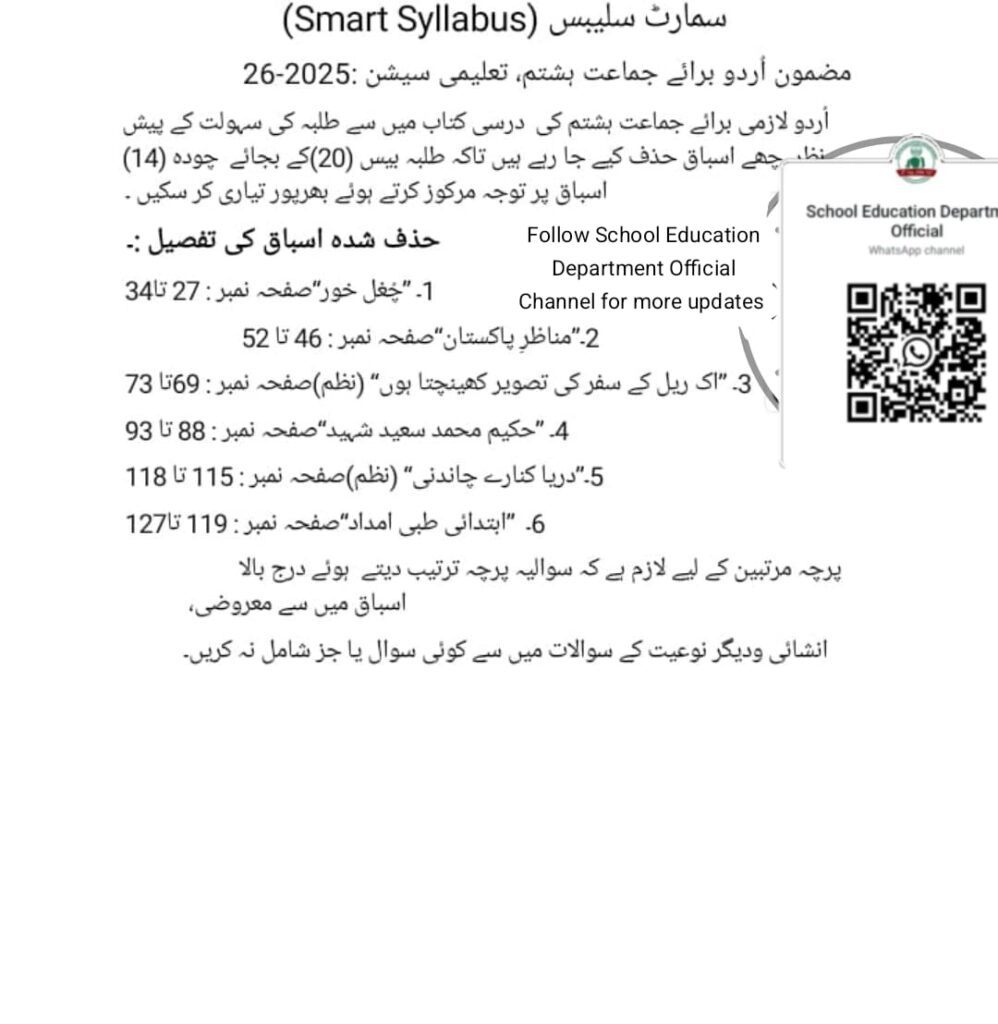
Urdu Smart Syllabus Class-8
Here is the fully optimized, mobile-responsive, and SEO-structured HTML code for your blog post. I have engineered this code to be: * Scoped: The CSS only affects content inside the .post-container div, so it won’t break your Jannah theme header/footer. * Full Width: Designed to utilize the full screen width as requested. * Speed Optimized: Uses lightweight CSS and system fonts/emojis (HD icons) instead of heavy images for instant Android loading. * SEO Ready: Includes Schema Markup, correct H-tag hierarchy, and keyword density. How to use: Copy the code below and paste it into the Custom HTML block in WordPress or the Text/Source tab of the Classic Editor.Urdu Smart Syllabus Class-8: Complete Guide & Download (2025)
Are you a student or teacher looking for the latest Urdu Smart Syllabus Class-8 to prepare for the upcoming annual exams? You have landed on the right page.
Navigating through the entire textbook can be overwhelming when exams are around the corner. The smart syllabus provides a focused roadmap, highlighting exactly which chapters, poems, and grammar portions are essential. This guide is designed to save your time and help you secure maximum marks in the 8th Class Urdu paper.
📚 Breakdown of 8th Class Urdu Smart Syllabus
The Urdu Smart Syllabus Class-8 is divided into three main categories: Prose (Nasr), Poetry (Nazm & Ghazal), and Grammar (Qawaid). Below is the detailed list of selected lessons that you must prepare.
1. Selected Chapters (Hissa Nasr)
For the prose section, the board has selected chapters that emphasize moral values, Islamic history, and Pakistani culture.
| Sr. No | Category | Chapter / Topic Name |
|---|---|---|
| 1 | Prose (Nasr) | Hijrat-e-Nabvi (S.A.W) |
| 2 | Prose (Nasr) | Khoon ka Badla |
| 3 | Prose (Nasr) | Pakistan kay Mausam |
| 4 | Prose (Nasr) | Dard-e-Dil kay Wastay |
| 5 | Poetry (Nazm) | Hamd (Praise of Allah) |
| 6 | Poetry (Nazm) | Naat (Praise of Prophet) |
| 7 | Ghazal | Hasti Apni Habab Ki Si Hai |
2. Grammar & Composition (Qawaid-o-Insha)
Grammar is the backbone of the Urdu paper. According to the Urdu Smart Syllabus Class-8, focus on these areas:
- Applications (Darkhwast): Sick leave, Urgent piece of work, Fee concession.
- Letters (Khatoot): Letter to father asking for money, Letter to friend inviting for vacation.
- Essays (Mazameen): Mera Watan, Quaid-e-Azam, Subah ki Sair.
- Basics: Wahid/Jama, Muzakar/Monas, Alfaz/Mutazad.
🔗 Important External Resources
To further enhance your preparation, consult these authoritative resources:
- Visit the Punjab Curriculum and Textbook Board for official books.
- Check the Ministry of Federal Education for updates on examination schedules.
⚡ Tips for Acing the Exam
Success isn’t just about what you study, but how you study. Here is how to maximize the utility of the syllabus:
- Make a Timetable: Allocate 1 hour daily specifically for Urdu.
- Practice Writing: Urdu papers require speed. Practice writing essays to improve speed and handwriting.
- Past Papers: Solve at least 5 years of past papers relevant to the smart syllabus topics.
❓ Frequently Asked Questions (FAQs)
Here are answers to the most common questions students ask about the class 8 Urdu syllabus.
📝 Conclusion
Preparing according to the Urdu Smart Syllabus Class-8 is the smartest way to achieve high grades with efficient effort. By focusing on the selected chapters, mastering the grammar portion, and practicing consistently, you can easily top your class.
We hope this guide helps you in your educational journey. Keep visiting Educational Trending News for more updates, guess papers, and results.